Wondering which foods to eat after tooth extraction can help you recover comfortably? The first few days after a tooth is removed are important because your mouth needs time to form a protective blood clot and repair the surrounding tissue. Choosing soft, nutritious meals can make eating easier while reducing irritation around the extraction site.
Whether you’ve had a single tooth removed or undergone wisdom tooth surgery, the right diet helps you maintain energy and get the nutrients your body needs. However, recovery varies from person to person, so follow your dentist’s instructions and gradually return to your normal diet as healing progresses.
Why Foods to Eat After Tooth Extraction Matter
After a tooth is removed, a small socket remains in your jaw. A blood clot forms inside this space and protects the underlying bone and nerves while healing begins.
Certain foods can irritate the wound or disturb the clot. As a result, you should choose meals that require little chewing and are unlikely to leave hard particles near the extraction site.
Good nutrition also supports tissue repair. Protein, vitamins, minerals, and fluids help your body recover while keeping you nourished during the first few days.
Foods to Eat After Tooth Extraction
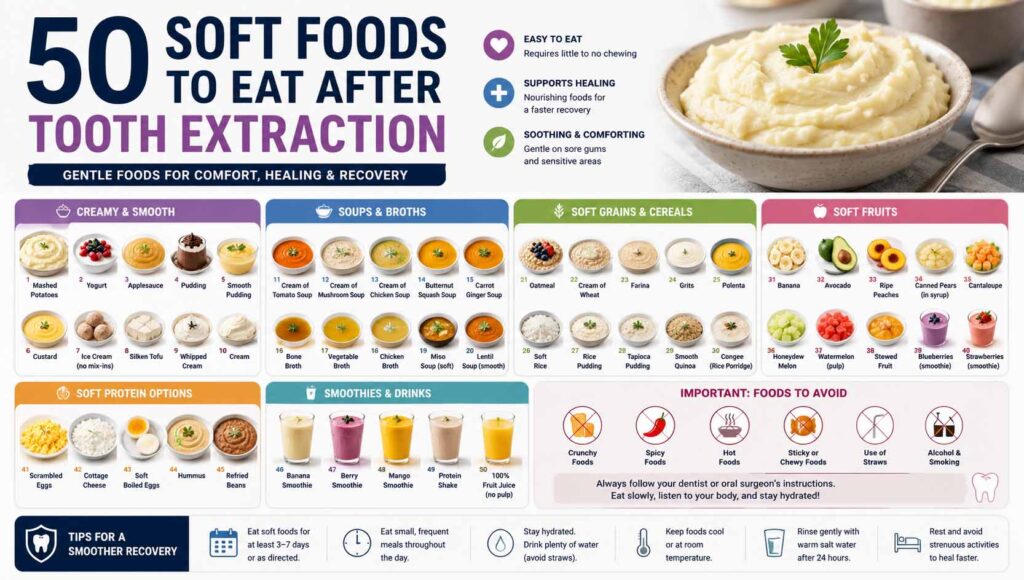
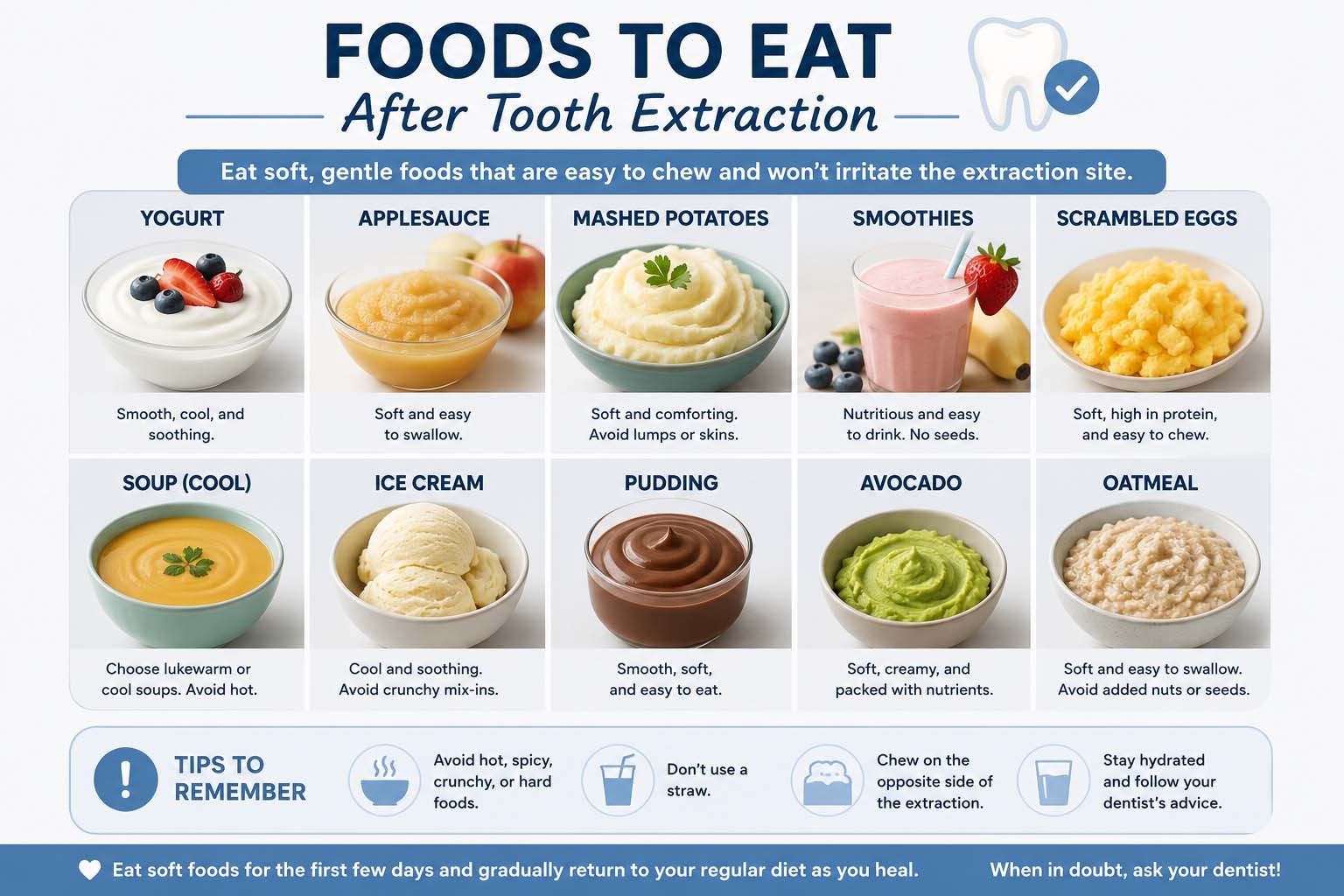
Choosing the right foods to eat after tooth extraction helps you get essential nutrients while keeping chewing and irritation to a minimum.
The best choices are soft, easy to swallow, and comfortable to eat. Start with foods that require little or no chewing, then introduce more texture as your mouth improves.
| Food | Why It Works |
|---|---|
| Plain yogurt | Cool, soft, and easy to swallow |
| Applesauce | Provides carbohydrates without chewing |
| Mashed potatoes | Filling and easy to prepare |
| Soft oatmeal | Provides energy and some fiber |
| Scrambled eggs | Supplies high-quality protein |
| Cottage cheese | Offers protein in a soft texture |
| Smooth soups | Provide fluids and nutrients |
| Mashed avocado | Contains healthy fats and other nutrients |
| Mashed banana | Soft, convenient, and easy to eat |
| Smoothies without a straw | Offer fruit and other nutrients in an easy-to-consume form |
These soft foods provide variety while helping you avoid unnecessary pressure on the healing area. Nevertheless, allow hot foods to cool before eating and avoid ingredients that contain hard seeds or crunchy pieces.
Best Soft Foods to Eat After Tooth Extraction: Yogurt
Plain yogurt is often a convenient choice after dental surgery. Its smooth texture requires little chewing, while its cool temperature may feel soothing.
Choose a variety without crunchy toppings, nuts, or seeds. If you prefer flavored yogurt, check the ingredients and choose an option that fits your dietary needs.
Applesauce for Easy Eating After Tooth Extraction
Applesauce provides energy without requiring chewing. Therefore, it can be useful when your jaw feels sore or opening your mouth is uncomfortable.
Unsweetened applesauce is a good option because it contains less added sugar. Eat it slowly and stop if its acidity irritates the extraction site.
Mashed Potatoes for Tooth Extraction Recovery
Mashed potatoes are filling and easy to prepare. You can make them smoother by adding a little milk or another suitable liquid.
During the first few days, avoid crunchy toppings such as fried onions or bacon bits. Also, let the potatoes cool until comfortably warm rather than eating them piping hot.
Scrambled Eggs for Healing After Tooth Extraction
Eggs supply protein, which your body needs to repair tissue. Soft scrambled eggs are generally easier to chew than firmer preparations.
For variety, you can prepare them with a little milk or a soft ingredient that you tolerate well. However, avoid adding crispy meat or other hard toppings.
Soft Oatmeal for Tooth Extraction Recovery
Soft oatmeal provides energy and can add variety to your meals. Prepare it until the texture is smooth and easy to swallow.
Allow it to cool before eating. If small grains or thick mixtures feel uncomfortable near the wound, choose a smoother food until your mouth improves.
Cottage Cheese as a Soft Recovery Food
Cottage cheese offers protein and calcium in a soft texture. It can work well as a snack or as part of a light meal.
Take small spoonfuls and chew gently if chewing is necessary. In addition, avoid varieties mixed with nuts, seeds, or crunchy ingredients.
Mashed Avocado and Banana After Tooth Extraction
Mashed avocado provides healthy fats, while banana supplies carbohydrates and other nutrients. Both foods have a naturally soft texture, making them easy to incorporate into meals.
Mash them thoroughly with a fork. If you prepare a smoothie, drink it from a cup rather than using a straw.
Smooth Soups for Easy Tooth Extraction Recovery
Blended vegetable soup or smooth chicken soup can provide fluids and nourishment without much chewing. You can also blend cooked vegetables with broth to create a smooth consistency.
However, avoid very hot soup during the early recovery period. Choose a comfortably warm or cool temperature, depending on what your dentist recommends.
Foods to Eat After Tooth Extraction: Recovery Timeline
Your diet can become more varied as discomfort decreases. Still, there is no single timeline that works for everyone, especially after complicated extractions.
| Recovery stage | Suitable food options |
|---|---|
| First 24 hours | Cool or lukewarm yogurt, applesauce, pudding, and suitable soft foods after numbness wears off |
| Days 2–3 | Mashed potatoes, soft scrambled eggs, smooth oatmeal, and blended soups |
| Days 4–7 | Soft pasta, tender fish, cottage cheese, and well-cooked vegetables |
| After the first week | Gradually reintroduce firmer foods when chewing feels comfortable |
This timeline is a general guide, not a strict schedule. For example, a straightforward extraction may heal differently from surgical wisdom tooth removal. Therefore, follow your dentist’s advice if it differs from these suggestions.
Soft Foods to Eat After Tooth Extraction and Wisdom Tooth Surgery
Wisdom tooth surgery may require additional recovery time, particularly when the surgeon needs to make an incision or remove an impacted tooth.
Fortunately, many of the same soft foods remain suitable. Consider these options:
- Greek yogurt without crunchy toppings
- Applesauce
- Mashed sweet potatoes
- Smooth vegetable or chicken soup
- Cottage cheese
- Soft scrambled eggs
- Well-cooked pasta
- Mashed bananas
- Soft oatmeal
- Tender fish that flakes easily
Eat slowly and avoid chewing directly over the surgical area. In addition, choose foods that do not leave hard particles near the wound.
For further guidance on healing and dental aftercare, consult the NHS guide to recovering after wisdom tooth removal.
Stay Hydrated During Tooth Extraction Recovery
Water is usually the simplest drink to choose after an extraction. Drink regularly throughout the day, taking gentle sips rather than using a straw.
Milk may also be suitable if you tolerate it and your dentist has not advised otherwise. However, avoid very hot drinks during the early recovery period because heat can increase discomfort or bleeding.
Some people also enjoy fruit and vegetable drinks. If you plan to add them to your diet later, learning about the benefits of juicing can help you understand how juices fit into a balanced diet. Nevertheless, avoid acidic drinks if they sting or irritate your mouth.
Foods to Avoid After Tooth Extraction
Although many foods provide valuable nutrients, some can disturb the extraction site or become trapped in the wound. For that reason, avoid hard, crunchy, sticky, chewy, or very spicy foods until your dentist says they are suitable.
Common examples include:
- Potato chips and hard crackers
- Popcorn
- Nuts and seeds
- Toast and crusty bread
- Sticky candy and chewing gum
- Tough meat
- Raw crunchy vegetables
- Very spicy foods
- Foods served extremely hot
Also, avoid drinking through a straw during the early recovery period. The suction may disturb the blood clot and increase the risk of dry socket, a painful complication that can delay healing.
Eating Tips for Recovery After Tooth Extraction
Small adjustments can make mealtimes more comfortable. Try these practical steps:
- Take small bites. Smaller portions are easier to manage when your jaw feels sore.
- Chew away from the extraction site. This reduces direct pressure on the healing area.
- Eat slowly. Rushing may cause you to bite the wound accidentally.
- Choose a comfortable temperature. Let hot foods cool before eating.
- Drink water regularly. Good hydration supports normal body functions.
- Follow your dentist’s instructions. Your aftercare plan may depend on the type of extraction.
In addition, do not rinse your mouth vigorously during the first 24 hours unless your dental professional gives you different instructions. After that period, your dentist may recommend gentle saltwater rinses to help keep the area clean.
Nutrients That Support Tooth Extraction Recovery
A soft diet should still provide enough nourishment. Although no single food guarantees faster healing, a varied diet helps supply nutrients that support normal tissue repair.
- Protein: Eggs, yogurt, soft fish, tofu, and mashed beans provide protein for tissue maintenance and repair.
- Vitamin C: Soft fruits and suitable blended foods can help provide vitamin C, which the body uses to form collagen.
- Zinc: Eggs, dairy products, and other suitable foods contribute zinc, which supports normal healing processes.
- Iron: Soft, well-cooked foods containing iron can help meet your nutritional needs.
- Healthy fats: Avocado and other tolerated foods provide fats that form part of a balanced diet.
If you are considering supplements, learn about the best time to take collagen before adding one to your routine. However, collagen supplements are not a substitute for balanced meals or proper dental care.
You may also be interested in the benefits of cod liver oil. Although it provides certain nutrients, it is not necessary for everyone after an extraction. Ask a healthcare professional before using supplements if you take medication or have an underlying condition.
Home Care Tips for a Smoother Tooth Extraction Recovery
Food choices matter, but your daily habits also affect comfort and healing.
Keep Your Mouth Clean During Recovery
Follow your dentist’s cleaning instructions carefully. Generally, avoid vigorous rinsing and spitting during the first 24 hours because these actions may disturb the clot.
After the first day, gentle warm saltwater rinses may help keep the area clean if your dentist recommends them. Brush your other teeth carefully, but avoid disturbing the extraction site.
Avoid Smoking and Vaping After Tooth Extraction
Smoking can interfere with healing and increase the risk of complications, including dry socket. Therefore, avoid smoking and vaping during recovery and follow your dentist’s advice about when it is safe to resume.
Rest After the Procedure
Take it easy on the day of your extraction. Strenuous exercise can increase bleeding or discomfort, so return to your normal activities gradually according to your dentist’s instructions.
Choose Drinks Carefully During Recovery
Water remains a reliable choice while your mouth heals. Once you have recovered, you might also explore the benefits of cucumber water for ideas on adding variety to your hydration routine.
However, no special drink can replace good oral hygiene, suitable nutrition, or professional aftercare.
Common Myths About Foods to Eat After Tooth Extraction
Misunderstandings about dental recovery can make it harder to choose appropriate meals. Here are a few common myths and the facts behind them.
Myth: You Should Avoid Eating for Several Days
Fact: Your body needs fluids and nutrients during recovery. You can usually start with suitable soft foods once the numbness has worn off and your dentist says it is safe.
Myth: Ice Cream Is Always the Best Recovery Food
Fact: Plain ice cream may feel soothing, but it does not provide all the nutrients your body needs. Instead, include options such as yogurt, eggs, and mashed vegetables.
Myth: Drinking Through a Straw Is Harmless
Fact: Suction may disturb the blood clot and increase the risk of dry socket. Use a cup instead during the early recovery period.
Myth: Spicy Foods Help the Wound Heal
Fact: Spicy foods can irritate sensitive tissues. Therefore, wait until your mouth has healed sufficiently before returning to strongly seasoned meals.
When Can You Return to Your Normal Diet?
Many people gradually resume their usual diet over one to two weeks, although some recover sooner and others need more time. The type of extraction, the complexity of the procedure, and your individual healing all affect this timeline.
A gradual approach is usually best:
- Days 1–2: Choose liquids and very soft foods that your dentist approves.
- Days 3–5: Try soft proteins, cooked vegetables, and tender pasta as comfort allows.
- Days 6–7: Introduce foods that require light chewing if the area feels better.
- After the first week: Gradually return to firmer foods when chewing is comfortable and your dentist’s guidance allows it.
Do not force yourself to eat foods that cause pain. If symptoms worsen rather than improve, seek advice from your dental professional.
Foods to Eat After Tooth Extraction: Frequently Asked Questions
What Are the Best Foods to Eat After Tooth Extraction?
Yogurt, applesauce, mashed potatoes, scrambled eggs, cottage cheese, soft oatmeal, smooth soups, mashed avocado, and bananas are useful options. They provide nourishment while requiring little chewing.
How Long Should I Eat Soft Foods?
Many people need soft foods for several days, while surgical or complicated extractions may require a longer period. Follow your dentist’s recommendations and increase food texture gradually as your comfort improves.
Can I Drink Coffee After a Tooth Extraction?
Avoid very hot coffee during the early recovery period because heat may increase discomfort or bleeding. Ask your dentist when you can safely resume drinking it, and choose a cooler temperature if you do.
Is There a List of 100 Soft Foods to Eat After Tooth Extraction?
A long list can offer variety, but you do not need 100 different foods to recover well. Instead, rotate suitable options such as yogurt, eggs, oatmeal, mashed vegetables, smooth soups, soft fruit, pasta, tofu, and tender fish. Choose foods that are easy to swallow and comfortable to eat.
Can I Eat Fermented Foods After My Extraction?
It depends on the food’s texture, acidity, and your stage of recovery. Smooth, soft options may be easier to tolerate than crunchy or strongly acidic foods. Once your mouth has healed, you may want to explore the best time to eat sauerkraut for gut health as part of your usual diet.
When Should I Contact My Dentist?
Some soreness and swelling are normal after an extraction. However, contact your dentist promptly if you experience severe or worsening pain, persistent bleeding, fever, pus, or a foul taste accompanied by other symptoms. Seek urgent medical help if you have difficulty breathing or swallowing.
Make Smart Food Choices During Tooth Extraction Recovery
Choosing the right foods to eat after tooth extraction can make mealtimes easier while helping you maintain a balanced diet. Soft, nutritious options reduce the need for chewing and provide energy and nutrients while your mouth heals.
Start with foods you can eat comfortably, stay hydrated, and avoid straws and hard or crunchy foods during early recovery. As a result, you can gradually expand your diet without putting unnecessary pressure on the extraction site.
Most importantly, follow your dentist’s aftercare instructions and pay attention to your symptoms. With appropriate food choices and careful oral care, you can support healing and return to your usual eating habits when your mouth is ready.